





Workplaces for everyone, a holistic approach to employee well-being
Contents |
[edit] APM’s holistic approach to employee well-being.
Recognising people’s diverse and distinct needs is at the heart of APM’s variety of programmes that foster employee well-being, and to support this, it has introduced a wide and diverse range of new measures to complement existing ones.
APM staff benefit from flexible and hybrid work setups, development workshops, designated mental health well-being days, mindfulness sessions and a team of Mental Health First Aiders. The organisation also provides employee support through community groups designed to assist primary caregivers and individuals navigating the challenges of menopause.
The success of these endeavours is not only seen in high levels of employee satisfaction but is also recognised externally. APM recently achieved a 2-star rating from Best Companies, a leading employee engagement specialist, signifying its standing as an “outstanding organisation to work for” that genuinely values its workforce. Moreover, Best Companies noted a 7% rise in APM’s employee well-being over the past 12 months.
Rosemary Mathews, Director of People Strategy and Facilities at APM, who has helped spearhead many of APM’s new well-being programmes, emphasised how employee happiness and a healthy work-life balance are paramount to the organisation. Her efforts and those of her team have proved so successful that they have been shortlisted in the ‘Best Association Team’ category at the 2023 Association Excellence Awards.
Rosemary said: “At APM, we implement various small initiatives that collectively make a significant impact. It's not about one big programme, but rather the accumulation of numerous smaller efforts that contribute to a greater whole.”
[edit] Collective Care
APM’s established team of Mental Health First Aiders is one such endeavour. Depression, stress, and anxiety are the primary causes of sickness absence for the UK’s workforce, collectively costing UK businesses around £35 billion per year, according to a report from the Centre for Mental Health. Recognising mental illness and knowing how to respond in a workplace setting poses a challenge, and many people will needlessly leave their jobs as a result of poor mental health.
APM’s Mental Health First Aiders are a dedicated group of staff members trained in mental health support. Timely intervention in mental health issues can profoundly impact well-being and recovery and, although they don’t offer formal counselling services, the group provides confidential care. This ensures that staff members receive appropriate referrals and assistance whenever needed through a private conversation.
While access to confidential conversations is vital, a culture of open discourse is equally important. APM’s Menopause Champions is one such discussion-driven initiative. Introduced last year, this informal support group, which is led by four “champions”, convenes regularly, providing a platform for staff to share experiences and discuss anything menopause-related. The primary focus is on supporting female colleagues, but the inclusive nature of the group means everyone is welcome.
[edit] Workplace Acrobatics
Building a supportive workplace culture means recognising the impact work environments have on mental health. In this context, flexible, hybrid, and remote working schedules offer a multitude of benefits for APM staff. And such arrangements, according to Rosemary Mathews, are now an essential component of the organisation’s workplace culture.
“APM used to have a strong office-based culture,” she said. “However, we have undergone a complete transformation, mostly because of the pandemic, and the flexibility we now offer is highly appreciated.”
APM’s current policy is that employees attend the office for four days each month, or more if they choose. Individuals have the freedom to customise their work schedules to suit specific circumstances, whether it's dedicating one day per week or coming in for four consecutive days. Additional time and flexibility are given to those who care for someone with an illness or disability at home, so they can manage their caregiving responsibilities effectively.
[edit] All The Small Things
The cumulative impact of small things cannot be underestimated when it comes to workplace well-being. Every year, APM staff have a dedicated well-being day to prioritise activities that enhance their mental health. Additionally, APM allocates a day for employees to engage in volunteer work for a cause of their choice. There is also the opportunity for personal and professional development through a training programme that ensures that all staff can gain a project management qualification.
Regular knowledge-sharing sessions are also led by APM employees, as well as external providers, creating opportunities for staff to learn from one another, acquire new skills, and further advance their careers.
This article appears on the APM news and blog site as "Creating workplaces for everyone: APM’s holistic approach to employee well-being" dated September 1, 2023.
--Association for Project Management
[edit] Related articles on Designing Buildings
- Are we doing the right thing? Shaping well-being into the future of our urban communities.
- Building up wellbeing in construction.
- Defining the office.
- Health and wellbeing impacts of natural and artificial lighting.
- Measuring the wellbeing benefits of interior materials.
- Office environment design ideas.
- Strategic ecology framework SEF.
- TG10 2016 At a glance, wellbeing.
- The Biophilic Office.
- The Flourish Model to enhance wellbeing.
- Wellbeing and buildings.
- Wellbeing considerations for property managers.
- What we know about wellbeing.
- Workplace definition.
- Workplace design.
- Workplaces of the future.
- What is a workplace?
Featured articles
Check out some of the best features and news from Designing Buildings as well as key stories from around the web.

Your views needed - a strategy for the professions, trades and occupations.

Confronting competency, codes, capacity and costs.

The hidden risk in modern construction supply chains.
Construction Management, 10 June

24 months to 14: CITB launches accelerated apprenticeships.
Bridging the gap between clients and contractors

Concerns remain around contractor quality, capability, and delivery.
Construction Management, 10 June.

Heat pumps beat boilers in new home tests.
Building Safety Act implementation in Wales
CIAT to host industry panel on 26 June.
New and updated CLC building safety guidance.
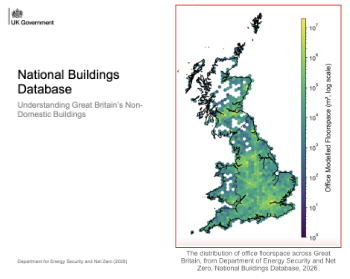
New UK National Buildings Database.
Building Safety Wiki Interviews

Chief executive of the British Woodworking Federation.
Planning condition discharge in England and Wales

A brief explanation from a building compliance expert, with further links.